Well, we haven’t had any excerpts for a bit. In part, this is because the more of the book exists, the less of it I can show you, as I don’t want to spoil any major plot developments or reveal as-yet-unknown characters. In another part <g>, the book (like all of my books (I hope)) consists of interlocking parts, which means that sometimes, a stand-alone piece isn’t completely satisfying, because you wouldn’t have read the earlier pieces that would explain things in the posted excerpt.
So it’s careful pick-and-choose. The following, though, is from quite early in the book, and doesn’t (I hope) give too much away. (I think I posted this bit in the Literary Forum, but that was quite a long time ago, and I don’t think I’ve put it up here before. (If I have, apologies to those who have read it, and I hope those who haven’t will enjoy it. <g>)
(NB: Note for people not familiar with the eating habits of the British Isles— “pudding” essentially just means “dessert”, and isn’t necessarily a pudding. Though should you be headed for the U.K. anytime soon, let me recommend the Sticky Toffee Pudding… preferably with vanilla ice cream…)
EXCERPT from A BLESSING FOR A WARRIOR GOING OUT, Copyright © 2026 Diana Gabaldon
There were still random bodies under the bushes, sleeping off the effects of the wedding, when Jamie, William and I foregathered the next morning in Jamie’s study, fortified with a liquid that might pass for coffee if you had a bad head cold.
“Ye’ve spent the last three months searching. Where did ye look, who did ye speak to, and what did they say?”
William stifled a yawn and blinked, clearly trying to organize an equally concise answer.
“Either he’s still on that ship—or he’s not,” Jamie said, somewhat impatient. “If he’s not, then he’s either on a different ship, or on land.”
“You sound as though you’ve studied logic, sir.” William hit the balance between respect and veiled sarcasm nicely, and I looked down at the desk to hide my smile. Jamie flicked one eyebrow at me, but declined to rise to the bait and tell William that he had indeed studied logic—at the Universitè de Paris.
“It doesna take much logic to see that the possibilities are limited, a charaidh,” he said mildly. “But as ye’ve clearly studied logic yourself, naturally ye went first to the harbormaster in Savannah.”
“I did. Pallas was, naturally, not there—but she’d visited the harbor four times within the year previous.”
“On a regular schedule?” I asked, pen poised over the paper, at the top of which I’d written, “Pallas – Savannah”. “Or randomly?”
That wrinkle seemed not to have occurred to William, but he’d come prepared, and pulled out a wad of grimy paper, much folded and much spattered with blots.
“I think it is random,” he said, after a moment’s consultation with his notes. “Intervals of one month, four months, three weeks, six weeks.”
“Where do you think he’s going?” I asked.
“Well, Pallas is a mid-sized Indiaman. Perhaps a draft of… eight thousand tons? That’s roughly what the harbormaster said.”
“Jesus H… I mean, that’s a medium sized ship?”
He glanced at me, and his mouth curled up at one side, but to his credit, he didn’t laugh.
“Well, compared to a man-of-war, yes. Though the biggest East Indiamen can be even bigger.”
“Well, we ken where he’s not going,” Jamie said.
“Where?” William and I spoke together, looked at each other and away with small, abashed smiles.
“To England,” Jamie said patiently. “Or anywhere else in Europe. I dinna think he went to New Spain, either. So he’s going to places on the coast—though he could ha’ got to Acadia and back easily enough on his four-month voyage, I suppose.”
William nodded, frowning.
“Yes. So?”
“Does it not seem peculiar to ye that a man—even a very rich one—would go to the expense of outfitting a ship of that size, in order to use it—apparently—for the sole purpose of keeping one prisoner from escaping? I’ve been imprisoned myself several times, very effectively and much more cheaply.”
William made a low rumbling noise, and I saw Jamie look down briefly to avoid my eye. I tactfully refrained from pointing out that I had, in fact, succeeded in getting him out of Wentworth prison, which was no piece of cake in terms of security. On the other hand, I had had the help of several friends, bribery and a small herd of cattle…
“All right,” William said. “So that would imply that keeping my—er—”
“Och, call him your father, for God’s sake,” Jamie said, irritated. “He is, as much as I am, and I canna put up wi’ your waffin’ about it much longer.”
“You mean that keeping Lord John captive is perhaps not Mr. Richardson’s sole purpose,” I interrupted hurriedly.
“Exactly,” William replied, giving Jamie a minor glare, but keeping his temper. “Waffin?” he asked, turning to me.
“I believe that’s Scots for ‘waffling’, in the sense of one being unable to make up one’s mind about something,” I said, discreetly not looking at Jamie.
“I see that I shall have to compile a small Scots dictionary,” William murmured, plucking a fresh quill from the jar and twiddling the shaft between his fingers. “Just as you like, sir. To return to business… if I may?”
Jamie flicked a hand at him.
“Avons-nous besoin d’une lingua franca? Continuez, sil vous plait.”
“Oh, Jesus H. Roosevelt Christ!” I snapped. “Both of you stop it this instant!”
Two pairs of dark blue eyes fixed on me.
“Or what?” they both asked together. In the exact same tone of deep interest. And froze.
I suppressed the urgent need to laugh and instead took a deep breath and let it out slowly and audibly.
“Once more,” I said, in measured tones, “and there will be NO pudding for supper.” This was received with dead silence, and fixing them with a beady stare, I called the meeting back to order.
“What else might Mr. Richardson need with a ship, then? Given the size of the ship, I think he might possibly be moving goods of some sort. And given the times…”
“Arms smuggling?” Jamie suggested, raising his brows. “Aye, well, we ken a bit about that—or at least Fergus does.” He glanced at William. “Ye said ye’d spoken to the harbormaster. Did ye manage to see any of the Pallas’s manifests?”
William shook his head, coloring slightly.
“I didn’t think to ask,” he said. “After all, I could hardly expect to find a listing for ‘one slightly-used lieutenant-colonel of infantry, officers, for the use of.’”
Jamie did smile at that, though he glanced warily at me.
“Mind, she means it about the pudding,” he said to William. “Beyond the possibility—well, say the likelihood—that he’s moving cargo of some kind—after all, even if he is, it may not be illegal—could he have some other reason for keepin’ Lord John aboard a ship, rather than takin’ him off to Jamaica or Hispaniola and lockin’ him up there?”
“Convenience?” I suggested. I felt slightly ill at the thought, but there it was. “If the threat of exposing Lord John’s, um—”
“Supposed preferences,” Jamie put in swiftly.
“Yes. If that’s Richardson’s only—or at least best—means of getting Hal to do as he wants, he has to be able to at least put the threat immediately into an early stage of fulfillment—like having Lord John arrested—in case Hal balks. And knowing—”
“And knowing his Grace,” Jamie finished, “he would”.
“You do know Uncle Hal, don’t you?” William said, eyeing Jamie with interest. “What did he do to you?”
“Nothing fatal,” Jamie said tersely. “Nor I to him. Yet.” He cleared his throat in a menacing way, and turned over a new sheet of paper.
Click to visit my official Book Ten webpage for information on A BLESSING FOR A WARRIOR GOING OUT, and to read more excerpts from it.
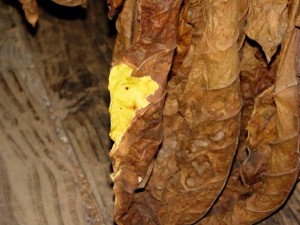
Photo courtesy of Geoffrey Moffett on Unsplash — thank you, Geoffrey!
This excerpt was also posted on my official Facebook page on Thursday, September 10, 2026.

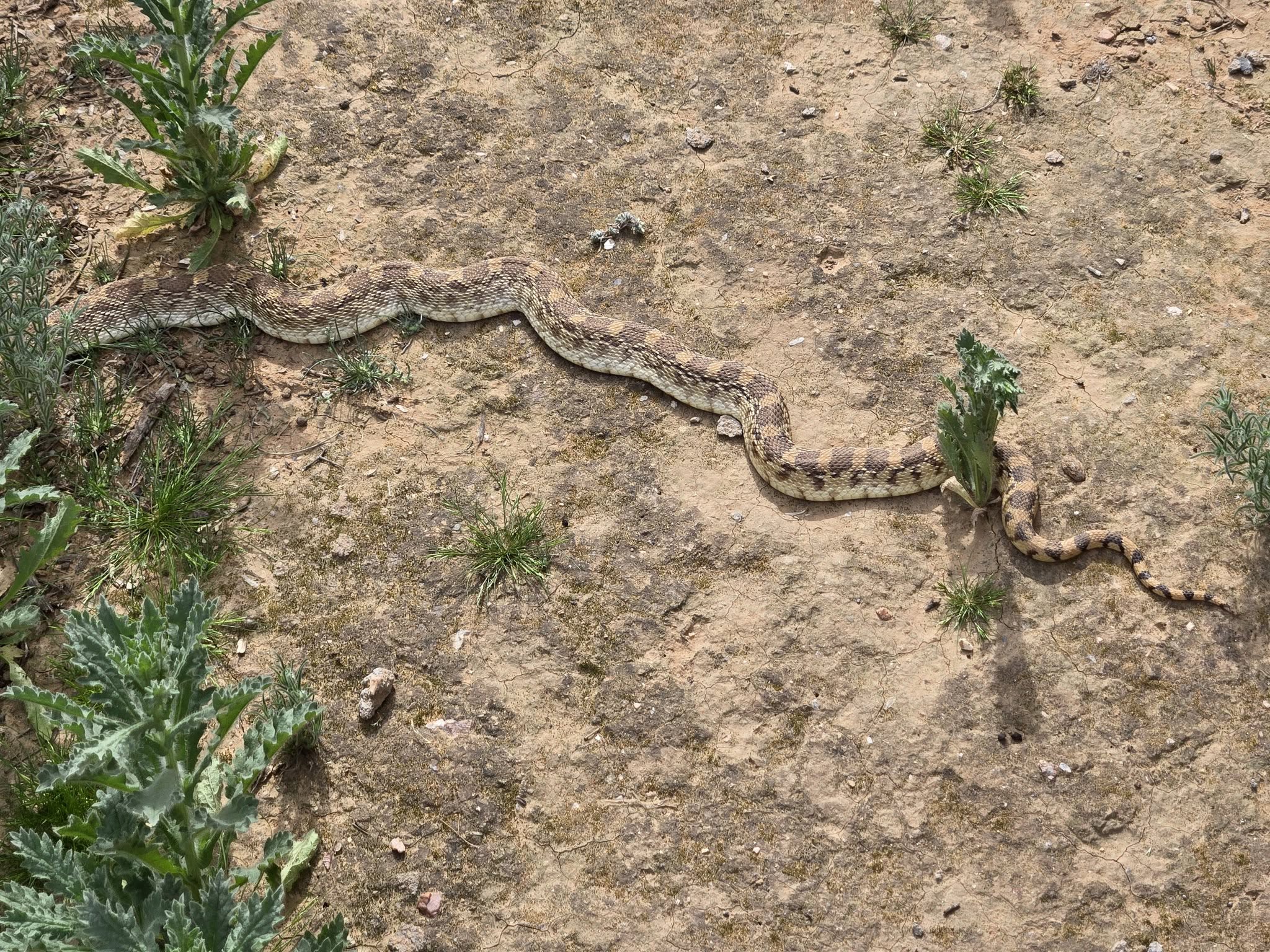
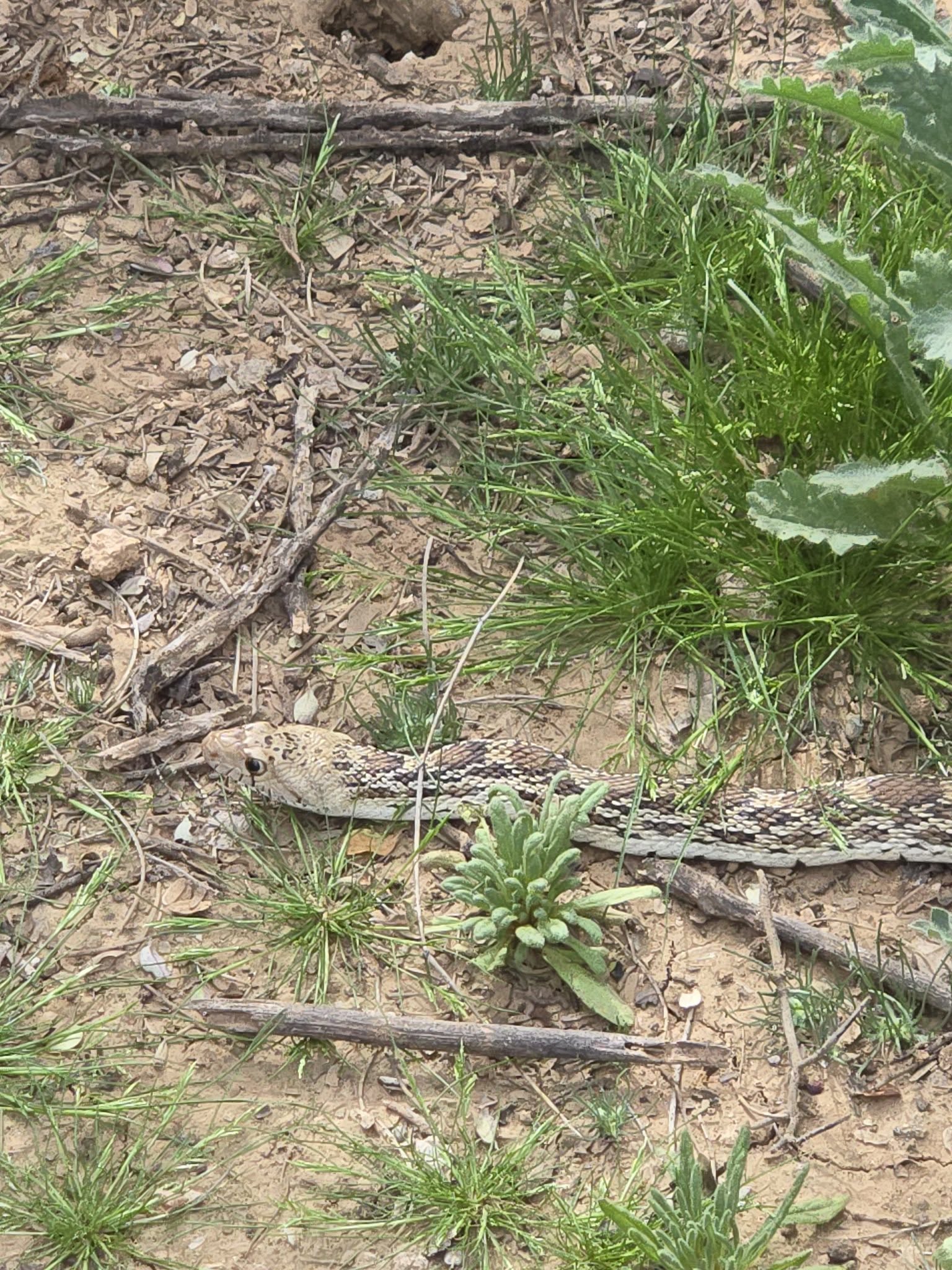
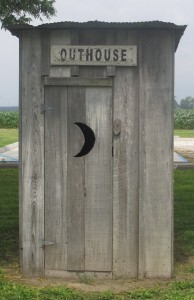 The first sound froze me in place, just inside the tiny privy. I extended one foot behind me, groping gingerly for the doorsill. The snake didn’t like that; I froze again as the warning buzz increased in volume. I could see the vibrating tip of his tail, sticking up like a thick yellow finger, rudely pointing from the heap of coils.
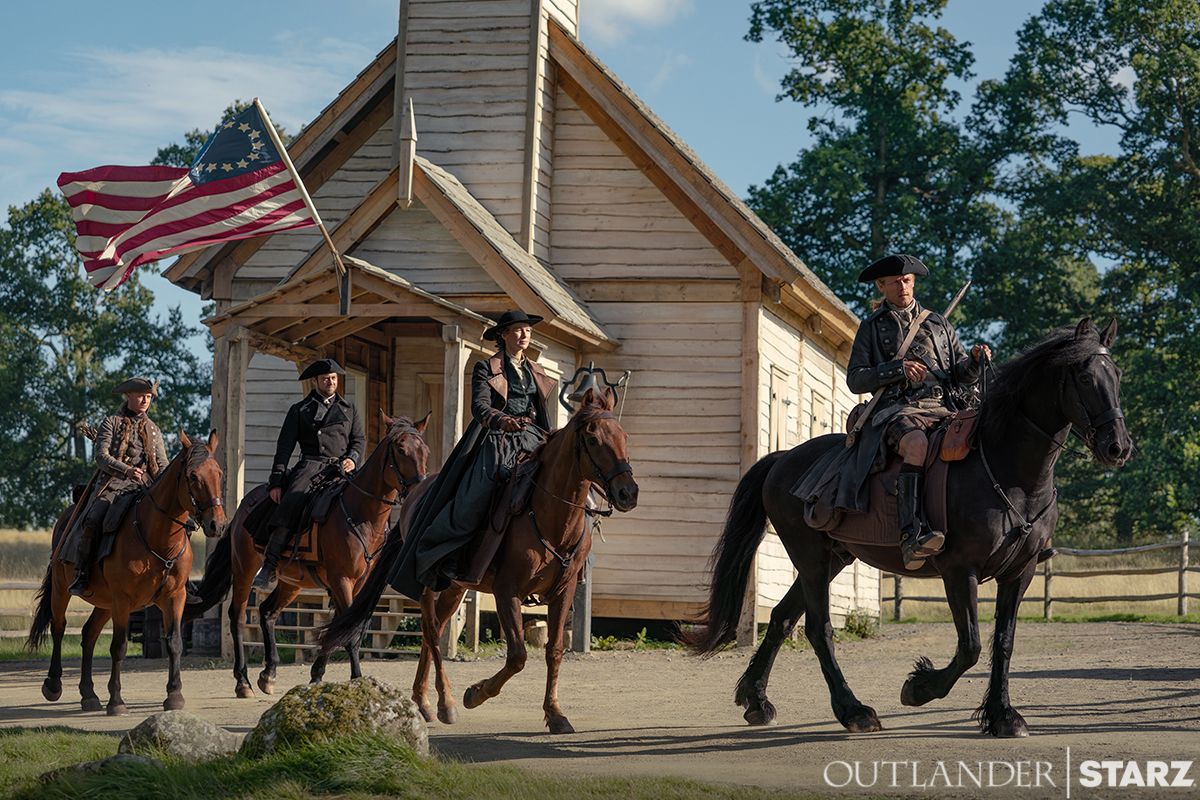

 The front door was open, and Brianna heard Mandy’s shrieks—and her father’s Gaelic shouting—coming from the office before she’d reached the porch.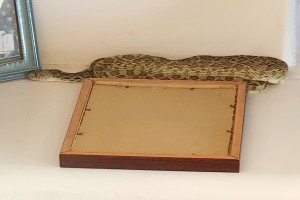
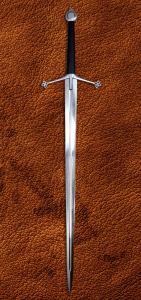
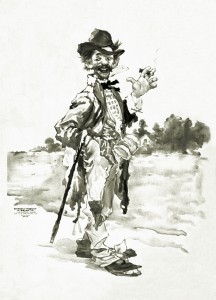 Rather to William’s surprise, Fraser appeared for departure clad in a faded kilt with a ragged hem, this worn with a hunting shirt shadowed with ancient blood-stains, and a belt from which depended an assortment of weaponry and a small goatskin bag whose purpose was a mystery. Tartan stockings on his feet, and a cartridge box hung from a strap over his shoulder completed the ensemble.